Convening the Hlubi Archive
In the twenty-first century, people who identify as amaHlubi are to be found all over southern Africa, with concentrated communities along the uMtshezi river in KwaZulu-Natal, around Herschel and Mount Fletcher in the eastern Cape, and in the Maloti mountain regions of Lesotho.
EMANDULO’s archive of Hlubi material was launched in December 2023 on the 150th anniversary of the arrest and imprisonment of the Hlubi leader, Langalibalele kaMthimkhulu following his conflict with the Natal government. Convening the Hlubi Archive offers engaging and accessible entry points into the growing collection of material that makes up the Hlubi archive on EMANDULO. The entry points include a timeline of when the various materials were produced, an image gallery, podcasts and artwork, with more to come.
More than a portal to the existing online collection, Convening the Hlubi Archive also extends an invitation to institutions, family associations and individuals to contribute materials to the online archive. (See details of how to contribute below.)
Convening the Hlubi Archive introduces the archive and its history. Anyone interested in the history of amaHlubi and how they came to be scattered across southern Africa will find The Hlubi Chiefdom in Zululand-Natal: A History published in 1983, a useful and accessible text.
Why the Hlubi Archive?
Identification by many people as amaHlubi often exists alongside other identifications. Many amaHlubi recognise a historic connection with the Dlamini ruling house of Eswatini, and certain amaHlubi are identified by themselves and by others as also amaZulu, amaXhosa or Basotho. Resisting easy classification, Hlubi identity and history thus offers an opportunity for thinking in new ways about ethnic identities that coalesced in the course of the twentieth century. This creates a demand for material capable of supporting new kinds of enquiry. The available material is moreover, extensive and varied.
While the motivation for fresh thinking and resources capable of fuelling that thinking, and the existence of a rich archive, are manifest in the case of Hlubi history, the situation is not unique to amaHlubi, Similar situations occur throughout southern Africa. The Hlubi archive is thus a vivid and inspiring example of what is possible in thinking beyond ethnic classifications, unsettling the colonial organisation of resources and making use of digital opportunities.
Entry points: timeline, image gallery, podcasts and artwork
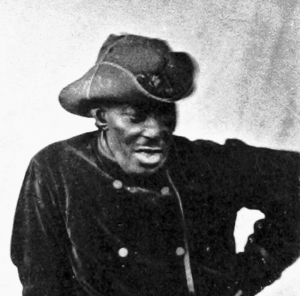
Image of Langalibalele (c. 1814 to 1889), chief of the amaHlubi. Click on the image to listen to our four-part podcast.
The handy timeline indicates when various elements of the archive were produced. Users can click on any of the points on the timeline and, using the ‘live footnotes,’ can immediately consult first-hand materials that date from that point in time
Convening the Hlubi Archive offers visual previews of materials in the archive in the form of an image gallery. Users can click on the rich images of Hlubi beadwork on this page and be transported directly into the collections in the archive.
A little over a century ago, historian and journalist Magema Magwaza Fuze published an extended series of articles in isiZulu in Ilanga lase Natal concerning the background and critical events of the conflict between the Natal government and Langalibalele in 1873 and 1874. Using these articles, EMANDULO created a four-part podcast titled ‘Magema Magwaza Fuze in his own words: Defending Nkosi Langalibalele’.
In his artwork ‘akuyona inqawe le (this is not a pipe)’ (2022), artist Sandile Radebe presents a carved wooden pipe (inqawe) that he encountered in an early archive photograph of a Hlubi man smoking. Instead of the drab black and white of the original photograph, Radebe deploys an electric contrast of red, green and turquoise, set against geometric grey patterns also inspired by archival imagery. The intervention supplants the authoritative ethnographic specimen-ization of the archival items with a vibrant contemporary engagement that productively foregrounds the ‘gap between representation and the physical object’.
Range and extent of the Hlubi archive
The Hlubi archive on EMANDULO convenes, in one place online, digital versions of materials previously scattered across the region and in institutions around the world. These include recorded oral accounts, published texts by early African and colonial writers, regional maps, collections of beadwork and other items. The collection features records and items related to the conflict between Langalibalele and the Natal colonial government from 1873 to 1874, and its aftermath. It is a work-in-progress to which material is constantly being added.
The archive is rich in sources which reveal the ways in which African writers and commentators discussed Hlubi history. A text in isiXhosa by John Mazamisa appeared in the June 1863 edition of Indaba. In ‘Izizwe zama-Mfengu,’ Mazamisa took as his topic the history of isiXhosa-speaking groups known collectively as amamfengu, and their relationship with abaMbo people whom he considered to be of Hlubi origins. This was an early contribution in what was to become a significant effort by African intellectuals to discuss and write about the presence and origin of people who saw themselves as amaHlubi in the eastern Cape. Contributions were made by writers such as Charles Pamla, William Gqoba and Pambani Mzimba who published further articles on the subject in isiXhosa during the late 1880s. Meanwhile, in 1880, a significant figure in Hlubi history gave a brief account of his life to the Cape Monthly Magazine, titled ‘Statement of Mathlomahulu’ (Cape Monthly Magazine, July-December 1880, p. 164). He was in fact Mehlomakhulu kaMpangazitha, a grandson of the eminent Hlubi leader, Bhungane kaNsele.
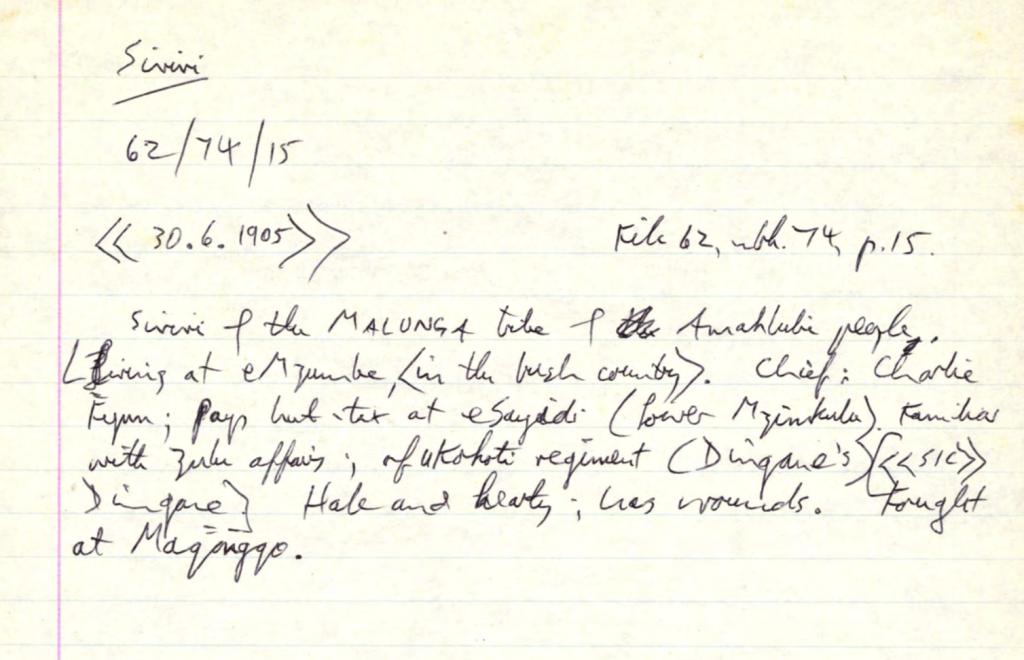
Editor’s annotated photocopies of the James Stuart Papers pertinent to Sivivi ka Maqungo. Click on the image to view it in our archival curation.
After the turn of the twentieth century, Sivivi kaMaqungo Malunga and Mabonsa kaSidlayi Kubheka discussed Hlubi history with James Stuart, a colonial official who, in his private time, pursued such conversations, making detailed notes of what was discussed. The discussions with Sivivi took place in June 1905 and subsequently for over a week in early March 1907, and those with Mabonsa during late January and early February 1909. The notes taken by Stuart have been arranged, annotated, translated and published in a six-volume compilation (The James Stuart archive of recorded oral evidence relating to the history of the Zulu and neighbouring peoples, published between 1976 and 2014 by the University of KwaZulu-Natal Press), available online on EMANDULO. Mabonsa’s account appeared in the second volume in 1979, while Sivivi’s testimony was published in volume five in 2001. Snippets of Hlubi history can also be found in Stuart’s notes of other conversations.
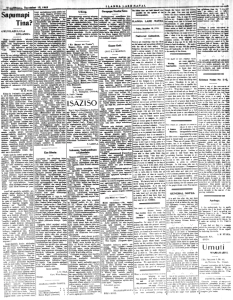
A copy of page five of Ilanga Lase Natal 10 December 1915. It features an article series by Magema Fuze reflecting on the origins of African groups. In this article he discusses the amaHlubi – when Theophilus Shepstone visited them and was alarmed by what he perceived to be a militarised reception. Click on the image to view it in our archival curation.
The decades which followed witnessed a steady flow of published history on the Hlubi past, by African writers. In December 1915, Magema Magwaza Fuze included two articles on Hlubi history in his column titled ‘Sapumapi Tina?’ in Ilanga laseNatal (3 & 10 December 1915) and touched on the subject occasionally during the next four years. Beginning on 12 September 1919 however, Fuze began an extended series of weekly articles in isiZulu concerning the background to and critical events in the conflict between the Natal government and Langalibalele in 1873 and 1874. Running for more than four months, almost entirely without a break, until 2 January 1920 the content of these articles have been used by EMANDULO to create a four-part podcast titled Magema Magwaza Fuze in his own words: Defending Nkosi Langalibalele.
Towards the end of the same decade, S.E.K. Mqhayi published two isiXhosa iibongi in honour of Hlubi leaders Bhungane kaNsele (‘U B’ungane, 5 November 1927) and Langalibalele kaMthimkhulu (‘U-Langalibalele’ 24 November 1928) in Umteteli wa Bantu. The following year Richard Kawa published Ibali lamaMfengu (Lovedale Press). Other notable publications include Henry Masila Ndawo’s Iziduko zama-Hlubi (1939, Lovedale Press).
Hlubi history was further discussed in sections in a number of larger studies, for example D. F. Ellenberger detailed conflict between the Hlubi and their neighbours in History of the Basuto, Ancient and Modern in 1912 (London, Caxton Press). A. T. Bryant’s Olden Times, published in 1929, included a large section on Hlubi history, with a section also appearing in J.H. Soga’s The South-Eastern Bantu, (Witwatersrand University Press) in 1930.
During the 1930s, oral histories were among the information garnered by state ethnographer Nicholas Van Warmelo, who gathered these accounts as manuscripts which were later typed. In the late 1930s and in 1940, he collected a small number of Hlubi histories from isiXhosa speakers, I. B.Gqwabaza, A. Z. T. Mbebe, S. T. Mhluzana and W. M. Spezi, as well as one Sesotho version from S. D. Sutu. In 1950 Rev. Jakobus Hadebe submitted an essay titled ‘Umdabuko wamaHlubi’ to a writing competition on the subject of African history organised by Killie Campbell.
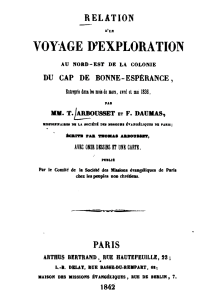
A digitised copy of the book written by the French missionary Thomas Arbousset covering the travels he and François Daumas undertook in 1836 in the regions surrounding the Caledon Valley, in modern Lesotho and the Free State Province. Click on the image to view it in our archival curation.
Early publications by missionaries contain important snippets of information concerning Hlubi history, often buried deep in chapters on other topics. The writings of French missionaries in Lesotho offer a case in point. On 19 March 1836 Thomas Arbousset and Francois Daumas visited Batlokoa kgosi Sekonyela waMokotjo at Merabing in the Mohokare valley of present-day Free State, and nearby Hlubi migrants are mentioned in passing by Arbousset in the French account of their expedition (Arbousset 1842: 66-67). In the translation into English published four years later, Hlubi were described as ‘refugees the greater part of whom dwell on the mountains of Mekeling, opposite Umpurane. Their principal chiefs are Mosete and Maitlo-a-magolu’ (Arbousset 1846: 33-34), the latter being Mehlomakhulu kaMpangazitha, son of Mpangazitha kaBhungane. The circumstances of how thousands of Hlubi people came to live with among the Batlokoa in the Mohokare valley were not provided initially, but Mpangazitha was subsequently described as ‘a celebrated conqueror from the east’ (Arbousset 1842: 111; 1846: 55). Only later were the events surrounding Mpangazitha’s invasion two decades prior introduced in the following way: ‘These events occurred in 1823. Defeated by Matuane [Matiwane kaMasumpa], Pacarita [Mpangazitha kaBhungane], the inkhosi of the Matluibes [amaHlubi], had just invaded the country of the Lighoyas [Leghoya / Dihoja].’ The account went on to provide an account of Mpangazitha’s fortunes, as well as his ultimate defeat and death at the hands of Matiwane (Arbousset 1842: 570-1, 576-578; 1846: 286; 289-90).
A few other details emerge in relation to another displaced Hlubi notable, namely Mahlapahlapa kaMnjoli, who is described as chief of the ‘Matlapatlapas,’ one of two nations that ‘sought and found in the mountain heights, a retreat from their common enemies, the most formidable of who is Dingan’ (Arbousset 1842: 152; 1846: 75-76). On the following pages Hlubi ironworkers are also credited with the manufacturing of hoes and hatchets (Arbousset 1842: 156-157; 1846: 77-78). A manuscript titled ‘Excursion missionnaire de M. T. Arbousset dans les Montagnes Bleues,’ written by Arbousset in 1840, suggests that ‘Matlapatlapa’ people joined Sekonyela around 1838 (Arbousset 1991: 94-5?).
Around the same time Arbousset published his travelogue, the Wesleyan missionary James Allison visited Langalibalele kaMthimkhulu in June 1844 at his ePhangweni residence on the iNgcuba stream, and described him in a letter as ‘a fine-looking young man of about thirty.’ During their conversation, Allison apparently encouraged Langalibalele’s wishes to have a missionary permanently stationed near him, for later that year Langalibalele sent envoys to Grahamstown to make such a request, a record of which has been kept in some form.
Colonial bureaucracy generated the vast majority of Hlubi records from the nineteenth-century, beginning with pleas that Langalibalele made to the government of Natal for asylum in May 1848 when he was threatened by Zulu king Mpande kaSenzangakhona. For the next eighteen months a flurry of official correspondence between various magistrates and the Secretary for Native Affairs, Theophilus Shepstone, documented increasingly urgent requests for refuge, the Hlubi flight from the Zulu kingdom, their temporary residence along the upper uMnambithi river and multiple efforts by Shepstone to remove and relocate them to a permanent Reserve beneath the uKhahlamba mountains. From 1849 onwards, records of the Weenen magistrate chronicle Hlubi interactions with figures of colonial authority, including John Macfarlane who was appointed Magistrate in 1855.
The Friend of the Sovereignty (10 December 1853). Click on the image to view it in our archival curation.
In parallel with British colonial records, newspaper articles as well as the correspondence and publications of various Christian missionary organisations chart the locations, living conditions and movements of Hlubi people from the 1850s. After the defeat of Sekonyela at the hands of Moshoeshoe at Khoro-e-Betloa in late October 1853, the much-reduced Batlokoa people accepted an offer from the British to resettle in the Wittebergen Reserve south of the Senqu river (‘Sikonyela’s Account’ The Friend of the Sovereignty and Bloemfontein Gazette, 10 December 1853, 2-3). Although no mention is made of Hlubi people in the article, large numbers moved with their Batlokoa neighbours to live in what became known as the Herschel District.
In February 1863 the Hermannsburg Mission Society attained land to build a mission near ePhangweni, the great place of Langalibalele (Hermannsburger Missionsblatt vol 10: 1863, no.6 pages 92-96). Later reports from this mission document significant changes that occurred in the lives of Hlubi people living between the upper uMtshezi and uMsuluzi rivers. In 1874 J. N. Hansen recorded that during the past 10 years ox-drawn ploughs had replaced manual hoeing in crop cultivation for three quarters of families living in the reserve and the previous harvest was the largest he had observed in the time he lived there (Hermannsburger Missionsblatt vol 21: 1874, no.5 page 77). The same page of this report describes young men unwilling to work in Hansen’s fields for low wages, considering the salaries of £2-3 per month they could be paid on the northern Cape diamond fields.
A challenge faced when convening archives compiled in multiple languages is illustrated by the earliest account of the Hermannsburg mission, named Empangweni after Langalibalele’s residence, but in the text Langilabele’s name is transcribed as Ulibalele (occasionally misspelled Ulibalelc too). Any search for his name using the standard orthography will not be successful.
The fragmentary and limited nature of the Hlubi archive until 1873 is entirely swamped by the deluge of official and private correspondence, court and parliamentary records, competing published accounts and newspaper articles that was generated after November 1873. Much of the record is either available on EMANDULO or accessible via links to other sites.
Early in 1873 Langalibalele was ordered to register all firearms owned by men under his authority with the local magistrate. His objections regarding the difficulty of executing such instructions were interpreted as insubordination. Langalibalele’s subsequent refusals to present himself in Pietermaritzburg to be disciplined by Shepstone culminated in orders for his arrest, and, ultimately, military shambles on the uKhahlamba escarpment in which seven people were killed. This unleashed the worst impulses in the colonial authorities of Natal. Martial law provided the legal protection for officials, soldiers and civilian volunteers alike to act with impunity and seize the property of Hlubi families and force men, women and children into labour on farms. Langalibalele was pursued into Lesotho, where he was arrested on 13 December 1873 at Leribe and 7000 head of Hlubi cattle were distributed among his captors.
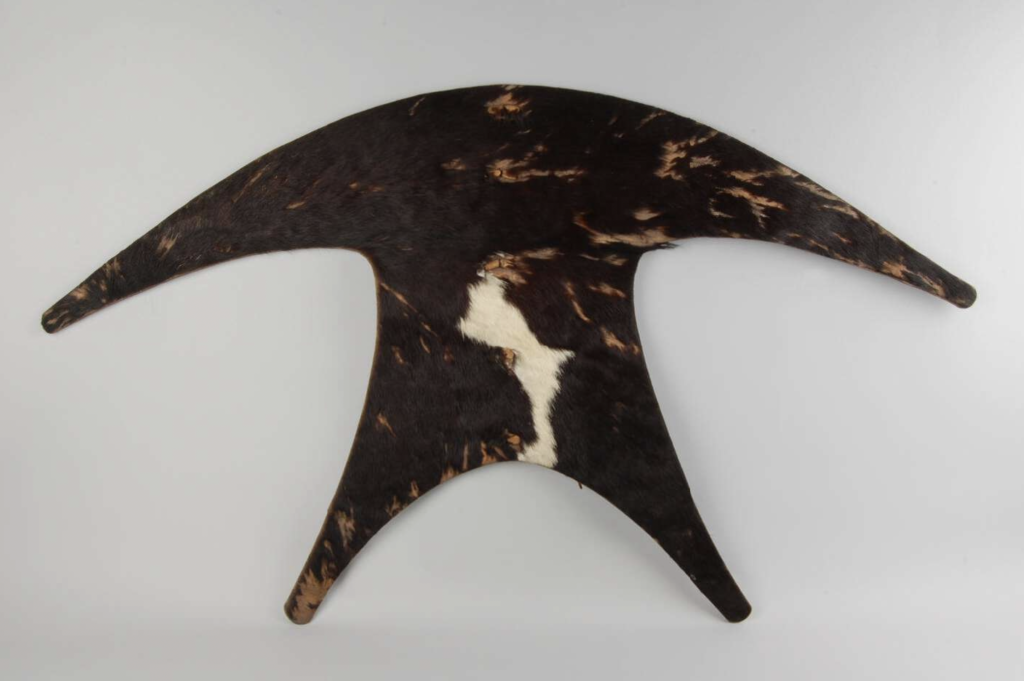
Langalibalele’s shield at The British Museum. Click on the image to view it in their collection.
Some of the oldest examples of material culture in the Hlubi archive are the personal possessions of Langalibalele taken from him at the time of his arrest. Consisting of his weapons and items of royal regalia, these objects were divided among at least three different parties and subjected to separate custodial regimes over the past 150 years. General Arthur Cunynghame, who commanded British troops in southern Africa at the time of the conflict was given Langalibalele’s shield and a wooden staff, which his daughter donated to the British Museum in 1936. A ceremonial war axe, quiver of spears and several carved staffs remained in Lesotho as the possessions of Henry Edward Richard Bright and passed through his family to the South African Museum in 1947 The British government kept his leopard-skin headdress, carved stool and another staff until 2004, when all three were returned to current Hlubi leader, Nkosi Muziwenkosi Langalibalele II Hadebe.
Langalibalele was brought to Pietermaritzburg in shackles and put on trial for treason on 16 January 1874, alongside 200 men including some of his sons, izinduna and followers. The legal proceedings and subsequent appeals are considered an egregious miscarriage of justice, attested to most famously and in minute detail by John William Colenso, Bishop of Natal, who was outraged by what he witnessed and rose to defend Langalibalele (Colenso 1874).
The Natal government sought to justify their actions by publishing a record of the trial (Natal government 1874), along with rationalisations of the harsh measures taken to suppress amaHlubi and their Ngwe neighbours in the immediate aftermath of the November 1873 skirmish. Consequences of the case extended beyond Natal when Lieutenant-Governor Benjamin Pine prevailed on the Cape administration of Sir Henry Barkly to introduce and enact legislation necessary to incarcerate Langalibalele and his son Malambule on Robben Island (Cape Act 3 of 1874, Act to provide for the imprisonment in the Colony of certain criminals sentenced in the Colony of Natal). Under steady pressure from Colenso the Langalibalele controversy gained momentum until the Colonial Secretary, Lord Carnarvon, commenced an enquiry of his own which confirmed the Natal government acted improperly and Pine was recalled on 29 November 1874. The matter was ultimately debated in the House of Lords on 12 April 1875 (Hansard) and additional legislation was required in the Cape legislature to provide for rules and regulations to accommodate Langalibalele and his household at Uitvlugt Manor on the Cape Downs.
During his imprisonment and trial, photographer James Saumarez Brock made a limited number of portraits of Langalibalele and his sons, either at Pietermaritzburg Gaol or in Brock’s studio at 10 Longmarket Street, Pietermaritzburg.
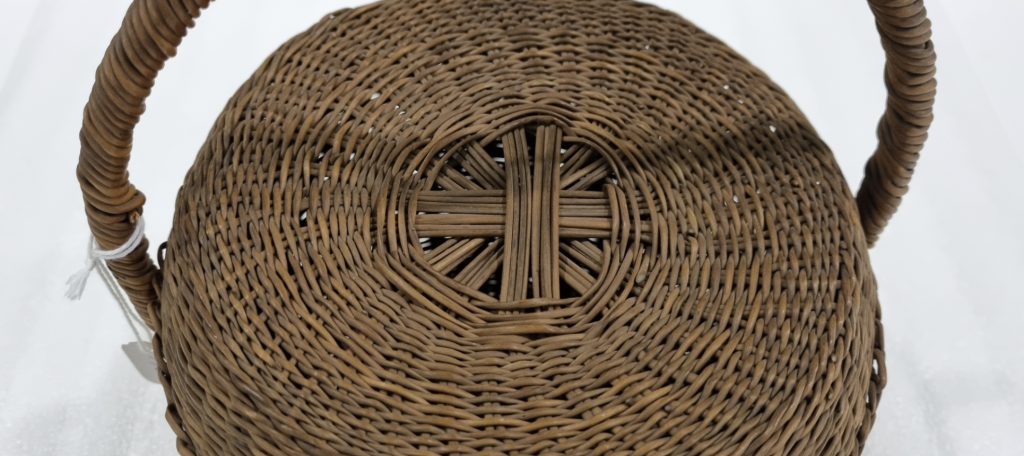
In 1877 and 1887 Lucy Lloyd visited Uitvlugt where she was given four woven household items made by the wives of Langalibalele. One of these items was a covered basket. Click on the image to view it in our archival curation.
During the twelve years that Langalibalele spent in exile at Uitvlugt, his family was frequently acknowledged or called on by local notables, records of which are preserved in different formats. General Sir Arthur Cunynghame arrived as commander of British forces in South Africa shortly after the outbreak of hostilities with amaHlubi in November 1873 (Cunynghame 1879: 2-6), and he was likely later presented with Langalibalele’s shield and a carved staff when he visited Lesotho during the winter of 1874 and stayed with British Resident Charles Duncan Griffith, although no mention is made of the weapons (Cunynghame 1879: 82-95). In 1877 and 1887 Lucy Lloyd visited Uitvlugt where she was given four woven household items made by the wives of Langalibalele. Uvangi presented a covered basket and isithebe, described as a “meat dish” (SAM 1705), as well as a pair of beer strainers, called “thluzo” by Lloyd and attributed to Nokwatuga (SAM 2263). These four items were donated by Lloyd to the South African Museum in 1913, but one of the strainers went missing in 1982.
Collections of Hlubi material culture have been identified in several museums, notably at Iziko, the University of Fort Hare and Walter Sisulu University, as well as the KwaZulu-Natal Museum and British Museum. Some of this material is already available on EMANDULO EMANDULO invites further contributions from holding institutions such as the McGregor Museum, British Museum, and others that we may not yet know about. Others undoubtedly await recognition and inclusion in this presentation.
EMANDULO also makes available wherever possible relevant photographs, maps, research papers, theses and published studies.
Contributions
Curating the Hlubi Archive on EMANDULO is a work-in-progress. The collection of material is far from complete and users of EMANDULO, as well as collecting institutions, family associations and individuals, are invited to contribute further materials, or links to further materials. This can be done using the contribution function at the bottom of each archival page. It is also possible to arrange to make a contribution by contacting the Five Hundred Year Archive project, 500yeararchive@gmail.com
Share this:
CREDITS
FHYA would like to acknowledge the commitment of Iziko Museums of South Africa, Killie Campbell Africana Library of the University of KwaZulu-Natal and the KwaZulu-Natal Museum to making their holdings openly accessible and the generosity of their staff in making this presentation possible. Presentation prepared by FHYA in 2023, using materials collected by Steven Kotze in partnership with Lailah Hisham (Iziko), Senzosenkosi Mkhize (Killie Campbell Africana Library of the University of KwaZulu-Natal), Justine Wintjes and Dimakatso Tlhoaele (KwaZulu-Natal Museum), Zukisa Madyibi (Walter Sisulu University), Thozama April and Sinazo Mtshemla (University of Fort Hare) and Robert Hart (Duggan-Cronin Gallery, McGregor Museum). Archival curation prepared by Benathi Marufu with assistance from Debra Pryor. Visual curation, page design, and development by Vanessa Chen with assistance from Makhosi Mkhize and Studio de Greef. Technical support provided by Hussein Suleman. Written content produced by Steven Kotze and Carolyn Hamilton, drawing on, amongst other things, recent research by John Wright and Carolyn Hamilton. Editorial and conceptual support by Carolyn Hamilton. The FHYA is especially grateful for the ongoing research support of Muziwandile Hadebe and the KwaZulu-Natal Provincial Archives, and would further like to thank Mwelela Cele, Patricia Davison, Nessa Leibhammer, John Wright and Gavin Whitelaw for their assistance and advice during the preparation of this curation. Our presentations are archived here. If you wish to make a contribution, use this link.
EMANDULO
EMANDULO is an experimental digital platform, in ongoing development, for engaging with resources pertinent to southern African history before colonialism across what is today eSwatini, KwaZulu-Natal, Lesotho, and the Eastern Cape.